Free transit chart calculator — night sky background showing how today's transit planets move across the constellations of your natal chart

ASTROCHART / TRANSIT CHART

Free Transit Chart Calculator

See how today’s planets are moving through your natal chart — with the only transit tool that also tells you where on Earth each transit hits strongest.

Step 1 — Your Birth

Step 2 — Transit Moment

1° tight3° default5° loose
§1

Why Your Transit Chart Matters Right Now

Right now, at this exact moment, the planets in the sky are forming new angles to the planets in your birth chart. Some of these connections last hours. Some last years. All of them shape what you experience.

A transit chart captures this live conversation between today's sky and the day you were born. It is the single most responsive tool in predictive astrology — more grounded than a daily horoscope based on your sun sign alone, and tied to your exact birth data rather than vague forecasts.

A transit chart is a snapshot of where the planets are today, overlaid on the planet positions at your birth. It reveals which planetary energies are currently activating your natal chart — and when their influence peaks.
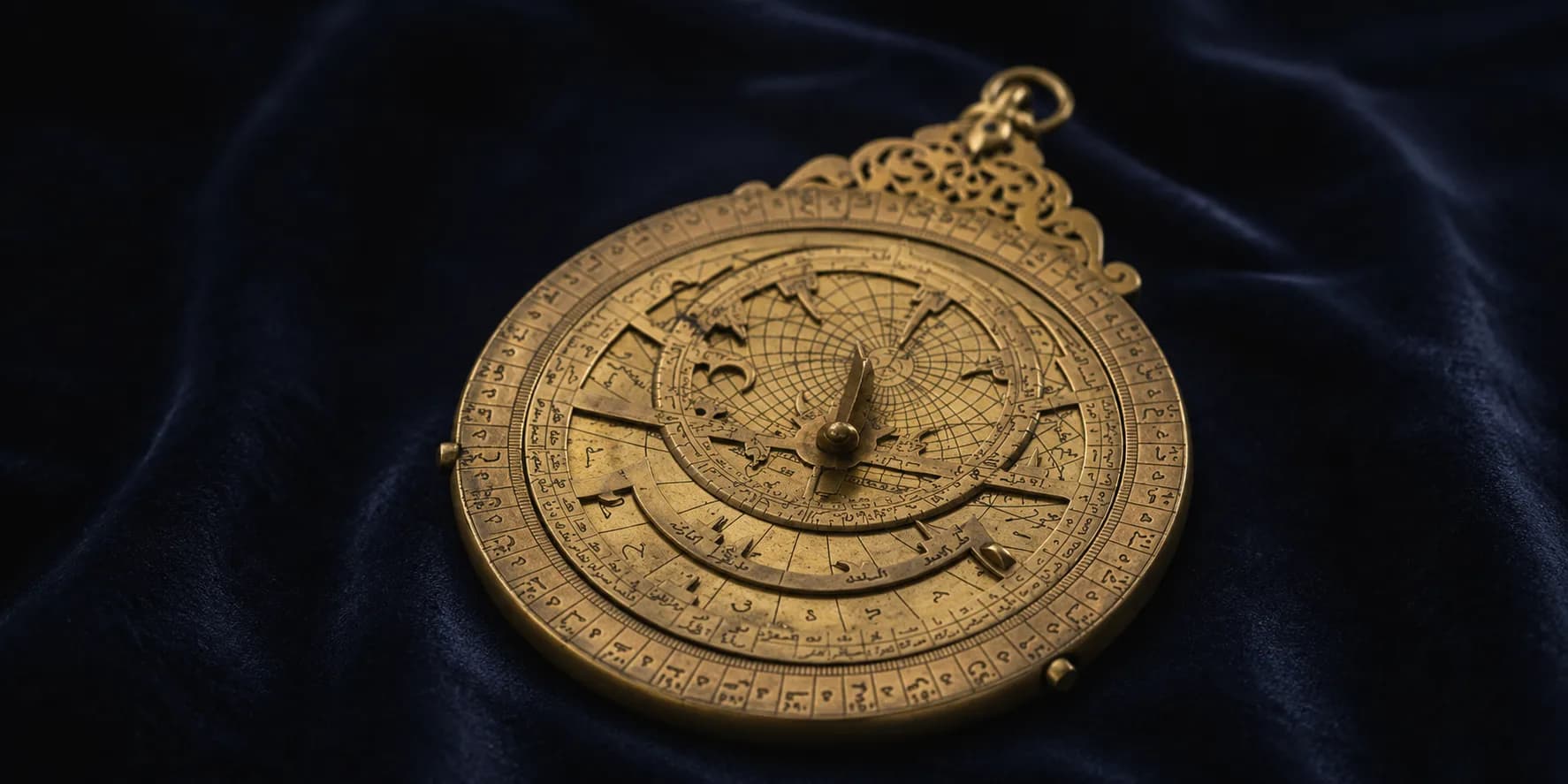
Antique brass astrolabe on dark velvet — the 19th-century ancestor of the modern transit chart calculator, used by astronomers to measure planetary positions
The transit chart is the modern descendant of the astrolabe — same sky, faster math.

On any given day, the sky forms roughly 7 to 10 new aspects to a typical natal chart, according to Swiss Ephemeris calculations. Most are routine. A handful are pivotal — exact conjunctions, oppositions, and squares that mark turning points in career, relationships, and personal growth.

Generating your own transit chart takes about thirty seconds with the calculator above. Reading it well takes a few minutes. What you do with the information can shape the next year of your life.

§2

What Is a Transit Chart?

A transit chart is a layered astrological chart that compares the current positions of the planets (the "transit") to the positions they held at the moment of your birth (the "natal" or "birth chart"). Together they form a bi-wheel — your birth chart on the inside, today's sky on the outside, with colored lines showing the active aspects between them.

Birth Chart
Birth chart silhouette — one ring, fixed at the moment of birthNATAL · STATIC

The sky frozen at one moment — the moment you were born. It never changes.

Transit Chart
Transit bi-wheel silhouette — inner natal ring + outer current sky ringTRANSIT · LIVE

Today’s sky compared against your birth chart. It changes by the second.

That's why a transit chart is the predictive tool every working astrologer leans on. It answers a single, useful question: *what is happening in the sky right now relative to me?*

Inside the chart, three things are doing the work:
  • · The natal planets (inner ring) — fixed, your personal pattern.
  • · The transit planets (outer ring) — today’s actual sky positions.
  • · The aspects (lines crossing the center) — geometric angles, color-coded.

People use a transit chart to time decisions, identify energetic cycles, work with relationship dynamics, plan major moves, and understand why certain weeks feel charged when others don't. It is not a fortune-telling device — it is a weather report for your personal sky.

§3

How to Read Your Transit Chart in 5 Steps

Reading your transit chart is straightforward once you know the order to look in. Follow these five steps.

01
Step 1: enter birth and transit moment data1990-01-1514:30New YorkCALCULATEINPUT → CHART

Step 01 — Generate Your Transit Chart

Enter your birth date, time, and city in the form. Then add today's date, time, and the city where you currently live (the location matters — more on that in §6). Click Calculate Transit Chart. The bi-wheel renders in under two seconds.

02
Step 2: identify the transit planets on the outer ring♂ Mars♈ 26°41′OUTER RING = TODAY

Step 02 — Identify Today's Transit Planets

Look at the right-side sidebar labeled Transit Chart. Each row shows one planet, its position in your birth chart, and its position right now. Notice where slow planets (Saturn, Uranus, Neptune, Pluto) have moved since you were born — those shifts mark major life chapters.

03
Step 3: find the closest aspects between transit and natal planetsnataltransit□ 0°45′APPLYINGORB < 1° = ACTIVE

Step 03 — Find the Closest Aspects

Scroll to the Aspect List section. Filter by orb under 1° to see the most active transits — these are the connections firing right now. Each row shows the transit planet, the aspect, the natal point it touches, and whether the aspect is applying (getting tighter, influence growing) or separating (loosening, influence fading).

💡 Pro tip: Start with outer planet transits (Saturn, Uranus, Neptune, Pluto) — they shape years, not days. Then refine with inner planet timing.
04
Step 4: check which natal house each transit planet activates10147TRANSIT JUPITER→ 10th housecareer themeWHICH AREA OF LIFE?

Step 04 — Check Which Houses Are Activated

Open the Transit Planets in Natal Houses table. This shows which area of your life (career, home, relationships, health, etc.) each transit planet is currently moving through. A planet in your 10th house affects career; in your 7th house, partnerships; in your 4th, home.

05
Step 5: read the full interpretation cardREADING #1CAREERHEALTHPOWERFULL READING CARD

Step 05 — Read the Interpretation

Tap any Top 3 Active Transit card to expand the full reading. You'll see what the aspect means, suggested actions, and the timing window. Premium users see a five-dimensional analysis (career, love, health, wealth, spiritual) plus location influence.

That's the full read in five steps. With practice it becomes thirty seconds of scanning.

§4

Understanding Transit Aspects

Aspects are the geometric angles between transit planets and natal planets. They determine the quality of each transit — supportive, frictional, or neutral. Your transit chart will show five main aspects:

Aspect geometry: conjunction at 0°0°
Conjunction (0°)

When a transit planet sits directly on a natal planet, both energies fuse. A Jupiter conjunction expands; a Saturn conjunction tests. Conjunctions are the strongest transit type and the easiest to feel.

Aspect geometry: opposition at 180°180°
Opposition (180°)

Two planets pull from opposite sides of your chart. Oppositions surface tension between competing needs — usually showing up through relationships or external events that mirror an inner conflict.

Aspect geometry: square at 90°90°
Square (90°)

Friction that demands action. Squares feel like obstacles, but they are the engine of growth. Avoidance prolongs them; engagement resolves them. Most pivotal life moments correlate with squares from outer planets.

Aspect geometry: trine at 120°120°
Trine (120°)

Easy, flowing energy. Most people miss trines because they don't require effort — opportunities slide by quietly. Recognized and used, they create breakthroughs without struggle.

Aspect geometry: sextile at 60°60°
Sextile (60°)

An invitation. Sextiles offer a window of supportive energy that you must actively step into. Unlike trines, they don't manifest without participation.

Applying vs Separating

Two more concepts matter on your transit chart: applying vs separating. An aspect is applying when the transit planet is moving toward exactness — the influence is building. It is separating when the planet is moving past exact, and the energy is fading. An applying transit at 1° orb will likely become exact within days for an inner planet, or weeks for an outer planet. Applying transits are where the action is.

About the Orb

The orb is the degree of inexactness. Most modern astrologers use 3° orbs for major aspects, 1° for minor work. Tighter orbs mean stronger, more time-specific transits. Your transit chart calculator above lets you adjust the orb in the advanced settings.

§5

Fast vs Slow Transits — How Long Does Each Last?

How long a transit lasts depends entirely on how fast the planet moves through the zodiac. This is one of the most useful facts in predictive astrology, and one of the least clearly explained. Here is the full reference table, calibrated against Swiss Ephemeris values.

Transit PlanetAvg Daily MotionOne Aspect LastsBest For
☽ Moon13.18° / dayhoursdaily mood, intuition
☉ Sun1.00° / day2–3 daysweekly focus, vitality
☿ Mercury1.38° / day (faster direct)2–5 daysdecisions, conversations
♀ Venus1.20° / day3–7 dayslove, money, beauty
♂ Mars0.52° / day5–10 daysenergy bursts, conflict
♃ Jupiter0.08° / day1–3 weeksgrowth, opportunity
♄ Saturn0.03° / day2–3 monthsmajor lessons, structure
♅ Uranus0.01° / day6+ monthssudden change, awakening
♆ Neptune0.006° / day1–2 yearsdissolution, vision
♇ Pluto0.004° / day1–3 yearsdeep transformation

The pattern is simple: the slower the planet, the longer the transit, and the heavier the life impact. A Moon transit shapes your morning; a Pluto transit can reshape your decade.

For predictive work, professional astrologers usually scan outer planet transits first (Saturn through Pluto) to identify chapter-length themes, then layer in inner planet transits (Mercury through Mars) for week-to-week timing. Your transit chart shows both at once — you only have to know which ring to weight more.

Planet daily motion in degrees per day (log scale)DAILY MOTION · LOG SCALE · DEGREES PER DAY0.01°0.10°1°10°Moon13.18°Sun1°Mercury1.38°Venus1.2°Mars0.52°Jupiter0.08°Saturn0.03°Uranus0.01°Neptune0.006°Pluto0.004°FROM 0.004°/DAY (PLUTO) TO 13.18°/DAY (MOON)
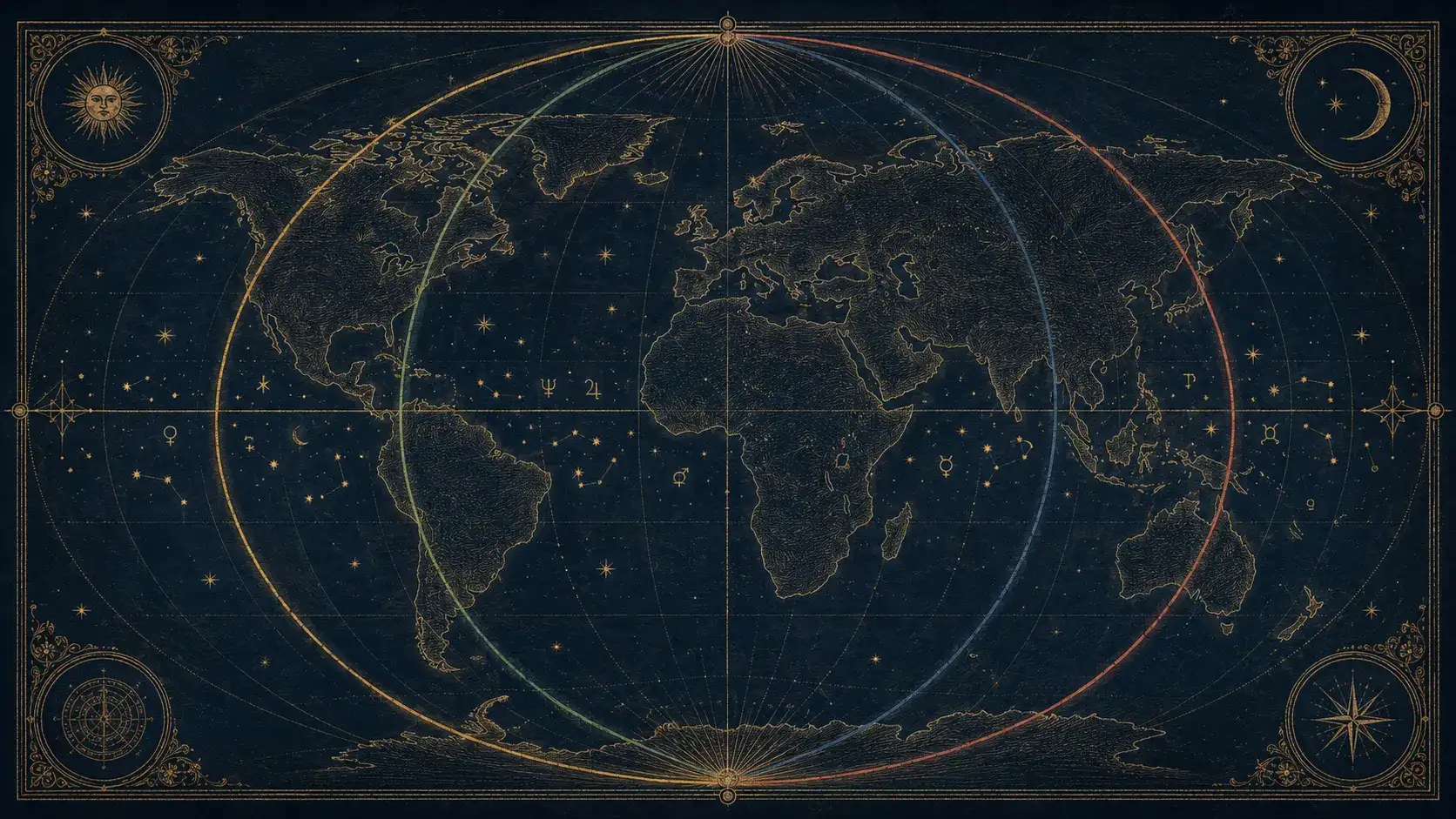
Astrocartography world map showing transit planetary lines arching across continents — location-aware transit chart analysis from AstroChart
ASTROCHART EXCLUSIVE

Location-Aware Transit — Where on Earth Is This Energy Strongest?

Most transit chart calculators ignore one important fact: the same transit hits differently depending on where you are on Earth. A Mars-Saturn square that feels minor in Tokyo can be career-shaking in London. This is not mysticism — it is geometry.

When today's active transit aspects coincide with the locations of these planetary lines, the transit's effect is dramatically amplified at those longitudes. This is the foundation of astrocartography, and it is what makes AstroChart's transit chart different from every other tool online.

Every transit planet projects four lines across the globe:
  • MC line — where the planet sits overhead at noon (peak career/public influence).
  • IC line — where the planet sits underfoot (deepest interior influence).
  • ASC line — where the planet rises at the horizon (identity activation).
  • DSC line — where the planet sets (relationship activation).

The map below shows your top five locations for today's strongest transits — ranked by AstroChart's proprietary scoring algorithm. Move to one of them, even briefly, and the transit energy will hit more directly. Avoid them if the transit is challenging.

Sample location influence map — schematic previewSAMPLESJMV#1London#2Cape Town#3Tokyo#4Mexico City#5SydneyCALCULATE YOUR CHART FOR YOUR PERSONAL MAP

This is the kind of analysis professional astrologers spend hours preparing for clients. Your transit chart does it instantly, included free with every reading.

→ Open the full astrocartography map for this moment
§7

Frequently Asked Questions

Related Astrology Tools