Best Places to Live, by Your Birth Chart
Where should I live? Rank cities for love, career, wealth, health and growth. Every place comes with its score, the planetary line behind it and how far away that line runs.
Example chart: born Jun 14, 1991, 7:30 AM in Barcelona. Enter your own birth details above.
- Top place · Love
- Phoenix, Arizona69
- Strong places · Love
- 11
- large cities scoring 60 or more
Venus first, then Jupiter, the Moon and the Sun on the Descendant: where affection and partnership come easily.
Best places for Love
When to go
Your lines never move. What changes is which natal planet a slow transit is pressing on, and while it does, all four of that planet's lines carry the charge. These are the next twelve months for the planets behind your first five places.
The timing layer is part of Pro. The rankings, the map and the city checker stay free.
By the AstroChart team · Updated November 10, 2026 · Lines computed with astronomy-engine (NASA/JPL ephemeris accuracy)
Where should I live? How this ranking answers it
Astrocartography draws your birth chart onto the globe. At the moment you were born, each planet was rising somewhere on Earth, setting somewhere else, overhead in a third place and at its lowest point below in a fourth. Join those places up and you get forty lines, four for each of the ten planets. Astrologers read a place by the lines that run near it. This page turns that reading into a ranking: every one of 4,546 cities is scored for five goals, and the best places to live for each goal come first.
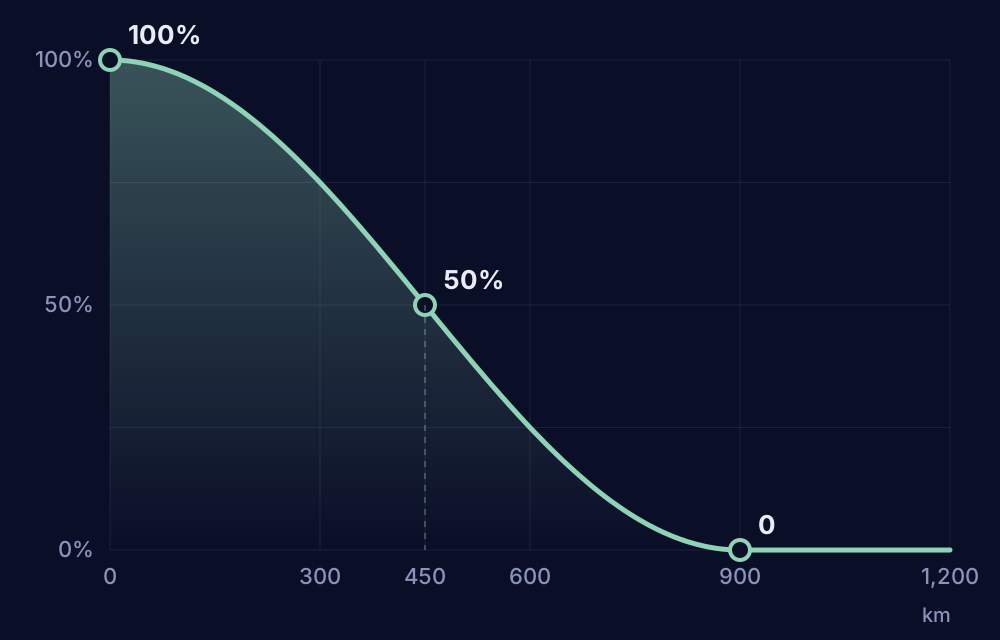
The score is about distance. A line counts in full where it passes through a city, half as much 450 km away and not at all beyond 900 km. A city near two supporting lines outscores one near a single line, but support saturates, so three weak lines cannot beat one strong one. Lines that ask for care take points off, never more than 60 percent of the score, so a city with a strong Venus line and Saturn on the Descendant still ranks, lower, with the Saturn line shown.
Nothing here is hidden. Each row lists the lines that earned the score and the ones that cost it, with distances, and the method table further down prints every weight. If you disagree with a weight, you can see exactly how much it moved a city up or down your list of best places to live.
Five goals, five sets of lines
A place is not good or bad in general. Venus on the Descendant makes one of the best places to live for love and does almost nothing for a career; the Sun on the Midheaven is the reverse. So each goal has its own set of lines, chosen from the way astrocartography has been read since Jim Lewis developed it in the 1970s.
Love
Venus on the Descendant, the angle of partners, counts most, then Venus rising and on the IC. Jupiter, the Moon and the Sun on the Descendant help. Saturn, Pluto, Mars, Uranus and Neptune on the Descendant ask for care: relationships there tend to be heavy, intense or unsettled.
Career
The Midheaven is the angle of work and reputation. The Sun and Jupiter there count most; Venus, Mercury and Mars follow, and Saturn adds a little for slow, earned standing. Neptune on the Midheaven blurs a career and takes points off.
Wealth
Jupiter and Venus on the Midheaven bring earning; on the IC they bring property and the security you hold. The Sun and Mercury on the Midheaven add to it. Neptune on either axis is the classic warning about money that dissolves, and Uranus on the Midheaven about income that swings.
Health
Health here means vitality, read from the Ascendant, the angle of the body, and the IC, the angle of rest. The Sun and Jupiter rising count most, then the Moon and Venus. Every hard planet on the Ascendant asks for care, Mars included. This is astrology, not medical advice.
Growth
Jupiter on the Ascendant is the classic line for widening your life; the Sun, Uranus, Mercury and Mars rising help you try new things and change. Saturn, Pluto and Neptune on the Ascendant weigh on that.
Love, career and growth use the same weights as our couples map, so a city reads the same on both pages.
The method table
| Line | Weight |
|---|---|
| ♀︎ Venus DSC | +1.0 |
| ♀︎ Venus ASC | +0.8 |
| ♀︎ Venus IC | +0.7 |
| ♃︎ Jupiter DSC | +0.7 |
| ☽︎ Moon DSC | +0.6 |
| ♀︎ Venus MC | +0.5 |
| ☽︎ Moon IC | +0.5 |
| ☉︎ Sun DSC | +0.5 |
| ♃︎ Jupiter ASC | +0.4 |
| ♆︎ Neptune DSC | -0.3 |
| ♂︎ Mars DSC | -0.4 |
| ♅︎ Uranus DSC | -0.4 |
| ♇︎ Pluto DSC | -0.5 |
| ♄︎ Saturn DSC | -0.6 |
| Line | Weight |
|---|---|
| ☉︎ Sun MC | +1.0 |
| ♃︎ Jupiter MC | +1.0 |
| ♀︎ Venus MC | +0.6 |
| ☿︎ Mercury MC | +0.6 |
| ♂︎ Mars MC | +0.5 |
| ☉︎ Sun ASC | +0.4 |
| ♄︎ Saturn MC | +0.4 |
| ♆︎ Neptune MC | -0.4 |
| Line | Weight |
|---|---|
| ♃︎ Jupiter MC | +1.0 |
| ♀︎ Venus MC | +0.8 |
| ♃︎ Jupiter IC | +0.6 |
| ☉︎ Sun MC | +0.6 |
| ♀︎ Venus IC | +0.5 |
| ☿︎ Mercury MC | +0.5 |
| ♃︎ Jupiter ASC | +0.4 |
| ♅︎ Uranus MC | -0.3 |
| ♆︎ Neptune IC | -0.4 |
| ♆︎ Neptune MC | -0.5 |
| Line | Weight |
|---|---|
| ☉︎ Sun ASC | +1.0 |
| ♃︎ Jupiter ASC | +0.8 |
| ☽︎ Moon IC | +0.6 |
| ♀︎ Venus ASC | +0.5 |
| ♃︎ Jupiter IC | +0.4 |
| ☽︎ Moon ASC | +0.4 |
| ♀︎ Venus IC | +0.4 |
| ☉︎ Sun MC | +0.3 |
| ♂︎ Mars ASC | -0.3 |
| ♅︎ Uranus ASC | -0.4 |
| ♇︎ Pluto ASC | -0.5 |
| ♆︎ Neptune ASC | -0.6 |
| ♄︎ Saturn ASC | -0.7 |
| Line | Weight |
|---|---|
| ♃︎ Jupiter ASC | +1.0 |
| ☉︎ Sun ASC | +0.7 |
| ♃︎ Jupiter MC | +0.6 |
| ♅︎ Uranus ASC | +0.6 |
| ☿︎ Mercury ASC | +0.5 |
| ♂︎ Mars ASC | +0.4 |
| ♃︎ Jupiter IC | +0.3 |
| ♆︎ Neptune ASC | -0.3 |
| ♇︎ Pluto ASC | -0.4 |
| ♄︎ Saturn ASC | -0.6 |
Reading a row: the line, the distance, the catch
Open any row of your best places to live and you see its reasons. "Venus DSC · 120 km" means your Venus Descendant line runs 120 km from the city centre, well inside the band where it counts. Up to three supporting lines are listed, strongest first, and up to two that ask for care, marked with an exclamation mark.
Two cities with the same score can mean different things. A 70 from a single line through the middle of town is a sharp, focused influence; a 70 from three lines a few hundred kilometres off is broader and milder. The reasons tell you which one you are looking at, and that matters more than the number.
The map shows the same thing. Pick a goal and only the lines that count for it stay lit; the numbered markers are the list. Tick "All lines" to see all forty.
Best places to live worldwide, by region or by country
The worldwide and regional lists of best places to live consider the 1,584 cities of 250,000 people or more. With every small town included, the top of a list filled with places that sit right on a line but that few people would ever move to. Pick a country and the list goes down to towns of 30,000, so smaller countries get a full list too; that ranking runs in your browser, with the lines already on the page.
Two rules keep a list useful. Places in one list sit at least 150 km apart, because a line acts over hundreds of kilometres and neighbouring cities score almost alike; without this, one metro area would take five places. And the worldwide list takes at most two cities from any country, so it shows you the whole world rather than one large country.
Not on your list of best places to live? Use the city checker. Type any place and you get its score for all five goals and every line within 900 km.
What 1,000 simulated births show
To see how a ranking of best places to live behaves for real charts, we ran it for 1,000 simulated births between 1950 and 2005, each born in a random large city. Three results are worth knowing before you read your own list.
8,100 km
The best place to live is usually far from home. The median distance from the birthplace to the top city for a goal was 8,100 km, and only 2.6% of top cities lay within 1,000 km of it.
3%
Home rarely makes the list. Only 3% of the simulated people found their birth city in any of their five worldwide top tens.
2%
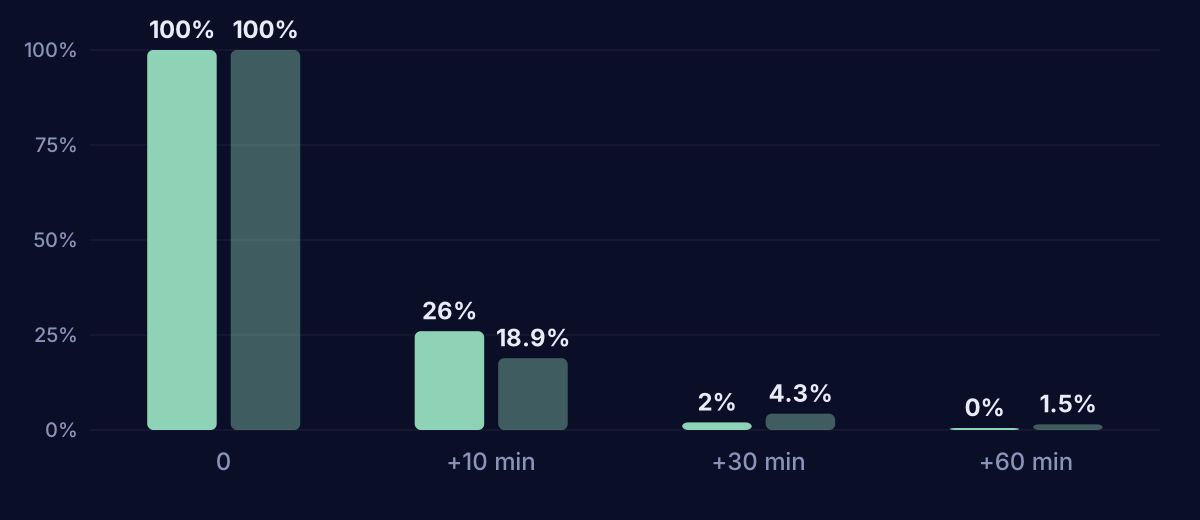
Birth time decides the list. With a birth time 30 minutes off, a median of just 2% of a top ten stayed, and the first place stayed first in only 4.3% of lists.
The lists also travel. One chart's best places to live, across the five worldwide top tens, spanned a median of 22 countries, so most people have strong places on several continents.
When to go: lines don't move, transits charge them
A common idea is that your lines shift over the years. They don't: they are drawn for the moment of birth and stay where they are. What changes is the sky above them. When a slow planet makes an aspect to your natal Venus, all four of your Venus lines carry that charge for as long as the transit lasts: weeks for Mars, months for Jupiter and Saturn, longer for the outer planets.
That is what the timing layer shows. For the first five of your best places to live, it finds the natal planets behind each one and lists the stretches of the next twelve months when slow transits press on them. Trines, sextiles and anything from Jupiter are marked opening; conjunctions, squares and oppositions from the other slow planets are marked testing. The same engine drives our cyclocartography page.
Timing is part of Pro. The rankings, the map, the country filter and the city checker are free and stay free.
What your chart can't tell you about where to live
A ranking like this answers one question: which places does your birth chart point to for a goal? It doesn't know rents, visas, languages, climate, jobs, safety, or where the people you love live. The best places to live for you are the ones that pass those tests too.
Use the list as a shortlist. Take the top few for the goal that matters most, check them against the practical facts, and look closer at the ones that survive: a relocation chart redraws your whole chart for a city, and the couples map runs the same kind of ranking for two people.
Astrology is a symbolic language, not a proven science. Read the results as prompts for reflection rather than predictions.
Birth time: how exact it needs to be
The lines depend on the minute of birth. The Earth turns one degree every four minutes, so a birth time 30 minutes off moves every Midheaven and IC line by 7.5 degrees of longitude, about 830 km at the equator and less towards the poles. The Ascendant and Descendant lines move too, by different amounts.
That is why the tool asks for a birth time, and why the simulation above matters: a 30-minute error left only 2% of a top ten in place, and even 10 minutes kept just 26%. A time from a birth certificate is worth looking up. A time remembered as "around three" is enough for a first look at the map, not for choosing where to live.
If you don't know your birth time at all, the lines can't be placed and this ranking can't help. Your birth chart still shows the signs and degrees of every planet.
Frequently asked questions
Where should I live according to astrology?
Astrocartography's answer to where you should live is: near the lines that support what you want. This tool ranks 4,546 cities for love, career, wealth, health and growth by how close your supporting lines run, and shows the reasons for each. Treat the top places as a shortlist and test them against practical facts.
What is the best astrocartography line to live on?
Like the best place to live, it depends on the goal. For love, Venus on the Descendant; for career, the Sun or Jupiter on the Midheaven; for wealth, Jupiter on the Midheaven; for health and growth, the Sun or Jupiter on the Ascendant. Jupiter lines are the most broadly helpful; Saturn, Pluto and Mars lines ask for care.
How close to a line do I need to live?
On this page a line counts in full at 0 km, half at 450 km and not at all from 900 km. Most astrologers agree that the effect is strongest within a few hundred kilometres.
Is this best places to live tool free?
Yes. The rankings for all five goals, the worldwide, regional and country lists, the map and the city checker are free. Visitors get 10 rankings a day, and signed-in members 30. The timing layer, which shows when your top places are charged by transits, is part of Pro.
Why is my city not on my list of best places to live?
The worldwide and regional lists only consider cities of 250,000 people or more, and they keep places at least 150 km apart. Pick your country to see towns down to 30,000, or type the city into the checker to see its score for every goal.
Do I need my exact birth time?
As close as you can get it. A 30-minute error moves the lines by hundreds of kilometres; in our simulation only 2% of a top ten survived it, and a 10-minute error kept 26%. A time from a birth certificate is best.
Is my birth data saved?
No. Your birth details are used for this calculation and not stored. If you are signed in with a saved birth profile, the form is filled in from it.